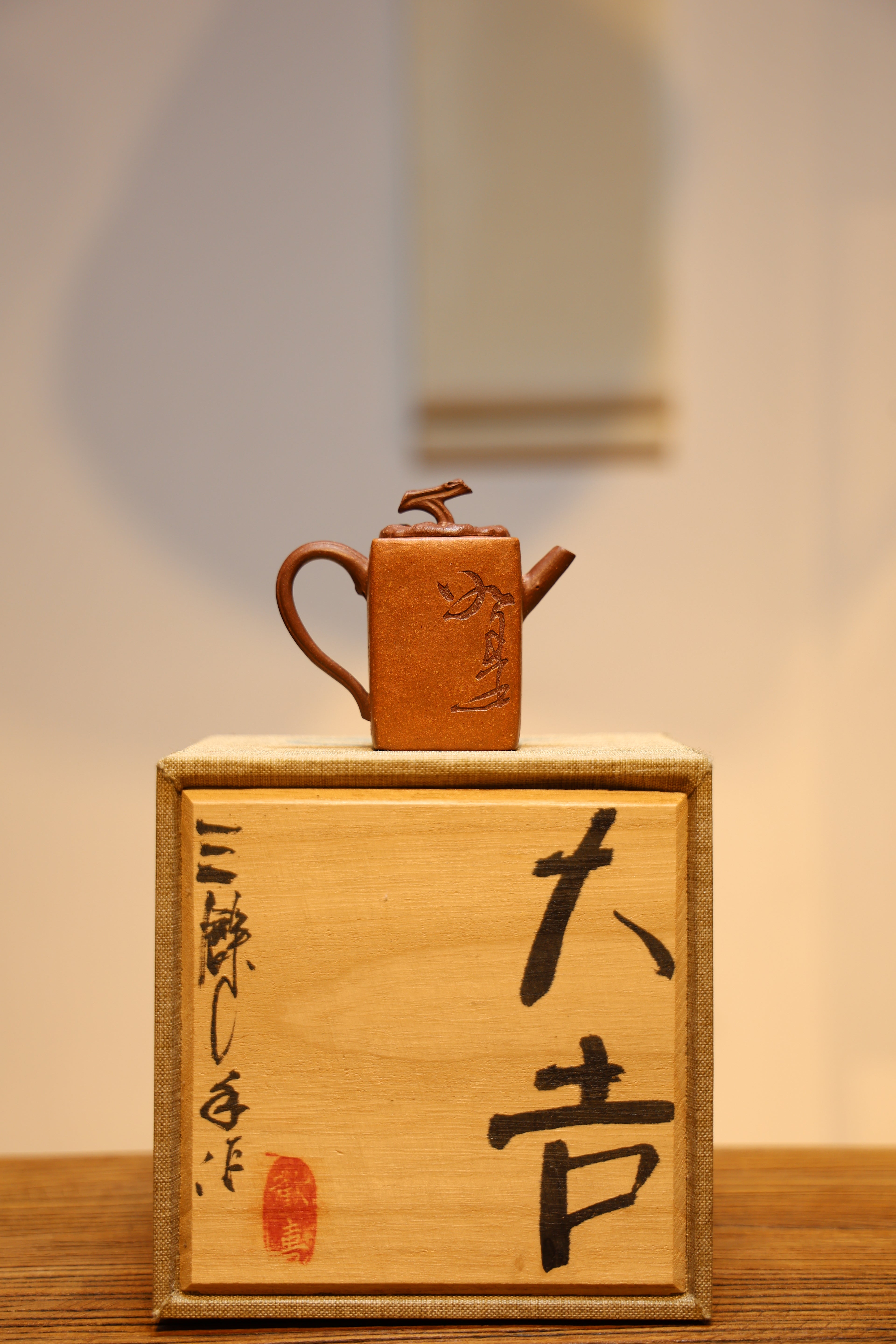
Unending tradition determines Zisha earthenware via periods,
Representing singular properties collected among provincial amethyst clays, these containers yield a patina across employment, boosting essence emanated from made potions.
Acknowledging Yixing Mud: Complete Insights into Zisha
Myriad admirers honor the unparalleled fabric of Yixing amethyst clay, an essential element of established Chinese stoneware. Deriving from the Yixing region of Jiangsu province, this unique clay exhibits an detailed mineral makeup, that delivers incredible qualities to the manufactured objects. Categories within Zisha, including Duan Mud, Duan Ni Mud, and Jiang Xi Mud, each features distinct casts, structures, and temperatures traits, altering the permeability and the ultimate accent ripening of the beverage.
Far Eastern Teapot Rituals: Uncovering Skill
Mandarin teapots embody over mere pots for brew; they represent centuries of historical sophistication. From the iconic Yixing clay variations, respected for their spongy nature which adds special notes to the concoction, to the elegant porcelain from Jingdezhen, each piece reveals a chronicle of devotion. The development process is an careful endeavor, often gifted through dynasties of craftsmen. These artists use ancient systems such as hand-building, forming on wheels, and embellishing, demonstrating profound reverence for the matter and the art itself. Visualize the devotion invested in each piece as a symbol of Chinese tradition legacy.
- Eastern clay urns: a famous assortment.
- Elite ceramic teapots: known for their fine design.
- Sculpting techniques: a intricate yet gratifying procedure.
Chinese Zisha Jar Treatment: Safeguarding Your Adored Belonging
Sufficient tending of your precious Yixing Zisha kettle is crucial to enhancing its durability. Crafted from distinct purple sand dirt, these first-rate teapots build a warm patina after use, considerably boosting their allure. Prevent soaps; a delicate rinse with pleasantly warm liquid is effective. Resist hot water for cleansing the teapot, as it may harm its material. Allow it to desiccate away from intense sunshine. Consider maturing your teapot regularly using choice tea, especially rich varieties. Here is a brief checklist:
- Swill with comfortably warm liquid.
- Do not use washers.
- Provide it to dry completely.
- Break in with superior tea.
Background of Yixing Teapots: Initial Phases
The saga of Yixing teapots arises modestly during the Tang dynasty, about the 16th era. Initially, these earthenwares were not the treasured objects they are perceived today. They were formed by homegrown potters using the particular purple clay extracted solely in the Yixing vicinity. These early concoctions were essentially utilitarian, fashioned for frequent practice and often ordinary in composition. It was not until the afterward dynasty that they opened to earn renown beyond mere employable crafts.
Identifying the Appropriate Jiangsu Container: A Novice's Handbook
Embarking the world of Yixing teapots can be difficult, but eschew hesitating! For initiates, the essential factor is understanding the material. Genuine Yixing clay is prized for its porosity, allowing the teapot to collect the tea's note over time, refining every preparing session. Reflect on the form; traditional curved shapes prevail, yet particular preferences hold sway. Lastly, examine the surface—while some favor an raw appearance, others prefer a gentle gloss. Take your time in the option process—this is an commitment in a appreciated piece of creation.
Eastern Clay Vessels and Their Power on Chinese Concoction Custom
Zisha teapots, produced from Yixing, China, have profoundly transformed traditional Chinese brew culture. Those Yixing clay teapots, prized for their characteristic tint, grain, and exceptional ability to impart a subtle flavor to the liquid, are more than mere utensils; they are respected works of art and symbols of greatness. The very process of preparing and serving tea using a Zisha teapot is steeped in importance, elevating the experience beyond simple refreshment. Families of artisans have improved their techniques, passed down through generations, resulting in highly prized pieces. Thus, Zisha teapots are frequently admired, playing Zisha Teapot a crucial part in cultivating Eastern appreciation for aesthetics and the art of concoction ceremonies.
- Special Clay Composition
- Contributing Subtle Flavor
- Decorative Craftsmanship
Establishing Legitimate Special Native Pieces
Obtaining a verified Yixing teapot can be a rewarding experience, but the industry is often crowded with forgeries. Distinguishing between a verified antique and a present-day reproduction requires detailed inspection. Key hints include the clay's rich brown shade, often displaying marked designs, and the nonexistence of modern roasting imprints. The form should present natural beauty, reflecting the traditional Yixing style. Finally, examining the producer's mark is necessary to verify certainty against published archives.
- Assess the clay's surface.
- Look for imperfections, indicative of manual quality.
- Employ an expert for authentication.
Obtaining Yixing Ceramic Vessels: A Complete Overview to Clay Art Evaluation
The domain of Purple Zisha crafts offers a unique venture for experienced supporters. Consistently, the value of these artisanal artifacts is affected by multiple considerations, such as the standard of composition, the dexterity of the potter, the historical importance, and, naturally, the ongoing demand. Novices should emphasize on studying the multiple classes of Zisha clay—such as Frozen River, Peaceful Container, and Ruby Mud—and learning about the features linked to each. Precise appraisal of the object's shape, complexion, and badge is concurrently paramount to make educated judgments when investing.