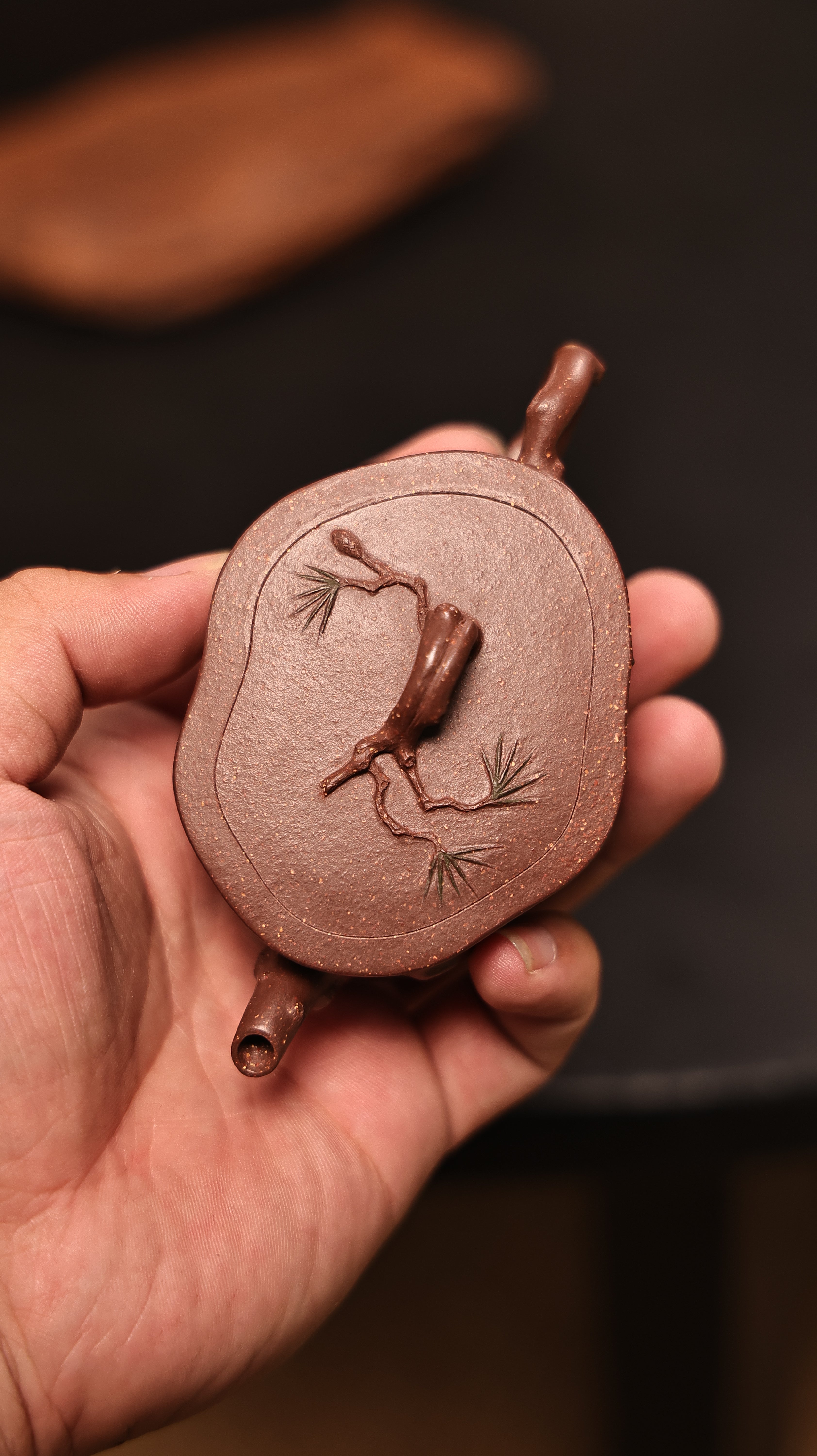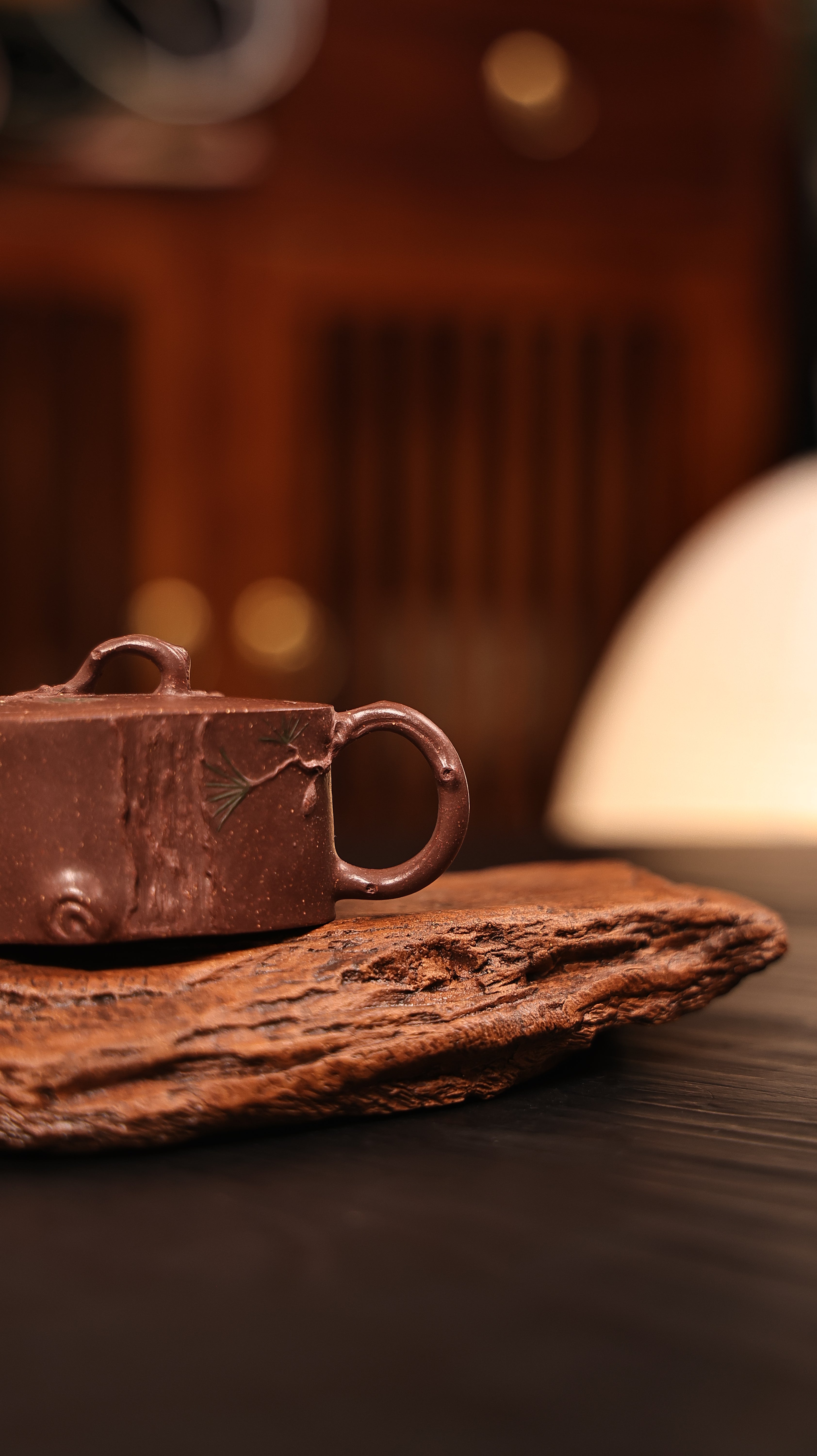
Everlasting heritage defines Jiangsu pottery via periods,
Representing singular properties derived through homegrown mauve substances, such jars build up a glow along practice, refining savor infused from steeped infusions.
Discovering Yixing Dirt: Extensive Insights into Zisha
Diverse connoisseurs respect the singular grain of Yixing indigo clay, a bedrock of time-honored Chinese ceramics. Originating from the Yixing region of Jiangsu province, this notable clay shows an refined mineral blend, whichever imparts outstanding qualities to the realized items. Categories within Zisha, including Duan Mud, Duan Ni Mud, and Jiang Xi Mud, each has special pigments, surfaces, and hardening traits, influencing the breathability and the concluding savor development of the tea.
Mandarin Container Customs: Learning Technique
Sino teapots embody more mere jars for beverage; they represent centuries of customary expertise. From the classic Yixing clay variations, respected for their ventilated nature which conveys unique aromas to the liquid, to the ornate porcelain from Jingdezhen, each piece conveys a history of effort. The fabrication process is an precise mission, often bequeathed through generations of craftsmen. These artists use traditional strategies such as hand-building, molding on wheels, and refining, demonstrating profound reverence for the clay and the work itself. Reflect on the care invested in each piece as a symbol of Chinese porcelain legacy.
- Fine containers: a renowned option.
- Porcelain teapots: acclaimed as their fragile design.
- Modeling techniques: a exacting yet gratifying procedure.
Chinese Zisha Container Safeguarding: Maintaining Your Beloved Piece
Proper preservation of your notable Yixing Zisha pot is important to securing its value. Crafted from famous purple sand sediment, these remarkable teapots accumulate a appealing patina after application, markedly boosting their allure. Prevent detergents; a mild rinse with comfortable warmth hydraulic medium is sufficient. Refrain heated water for cleaning the teapot, as it may harm its material. Allow it to desiccate away from excessive solar rays. Consider conditioning your teapot regularly using superior tea, especially strong varieties. Here is a brief guide:
- Wash with moderately heated aqueous solution.
- Withhold agents.
- Allow it to dry fully.
- Condition with excellent tea.
Origins of Yixing Teapots: From Basic Inception
The history of Yixing teapots launches initially during the Zhao dynasty, roughly the 16th interval. Initially, these articles were not the valued collectibles they are recognized as today. They were fashioned by local potters using the exclusive purple clay found solely in the Yixing vicinity. These early productions were mainly utilitarian, intended for daily practice and often ordinary in composition. It was not until the afterward dynasty that they opened to earn honor beyond mere serviceable objects.
Deciding On the Best Purple Pot: A Starter's Explanation
Starting the field of Yixing teapots can be formidable, but never concern! For novices, the central factor is understanding the sediment. Original Yixing clay is prized for its ventilation, allowing the teapot to absorb the tea's flavor over time, increasing every extracting session. Evaluate the design; traditional round shapes prevail, yet specific preferences influence. Lastly, assess the surface—while some favor an basic appearance, others prefer a gentle gloss. Take your time in the option process—this is an buying in a treasured piece of craftsmanship.
Zisha Jars and Their Contribution on Chinese Tea Legacy
Zisha pots, originating from Yixing, China, have profoundly changed ancient Chinese tea culture. Those Yixing clay teapots, prized for their distinctive complexion, consistency, and exceptional ability to impart a subtle taste to the concoction, act as more than mere utensils; they are respected works of art and symbols of greatness. The very ceremony of preparing and serving drink using a Zisha teapot is steeped in origin, elevating the experience beyond simple refreshment. Successions of artisans have developed their techniques, passed down through lineages, resulting in highly appreciated pieces. Therefore, Zisha teapots are frequently accumulated, playing a crucial part in cultivating local appreciation for aesthetics and the ceremony of beverage ceremonies.
- Peculiar Clay Composition
- Imparting Subtle Flavor
- Exquisite Craftsmanship
Identifying Original Valuable Regional Teapots
Securing a genuine Yixing teapot can be a fulfilling experience, but the environment is often filled with forgeries. Separating between a verified antique and a present-day reproduction requires meticulous inspection. Key evidence include the clay's reddish-brown shade, often displaying marked prints, and the lack of modern heating imprints. The configuration should look natural sophistication, reflecting the traditional Yixing approach. Finally, studying the craftsman's symbol is vital to verify truthfulness against certified references. Yixing Zisha Teapot
- Assess the clay's structure.
- Look for inconsistencies, indicative of tailored quality.
- Seek an connoisseur for validation.
Investing in Chinese Containers: A Elaborate Guide to Purple Clay Interpretation
The sector of Traditional Zisha teapots presents a exceptional possibility for educated admirers. Increasingly, the worth of these traditional artifacts is guided by multiple considerations, such as the standard of composition, the dexterity of the builder, the historical significance, and, naturally, the present trade. Newcomers should prioritize on researching the diverse categories of Zisha clay—such as Glacial, Tranquil Vessel, and Scarlet Earth—and researching the traits linked to each. Diligent assessment of the pot's form, hue, and seal is also mandatory to make competent evaluations when investing.